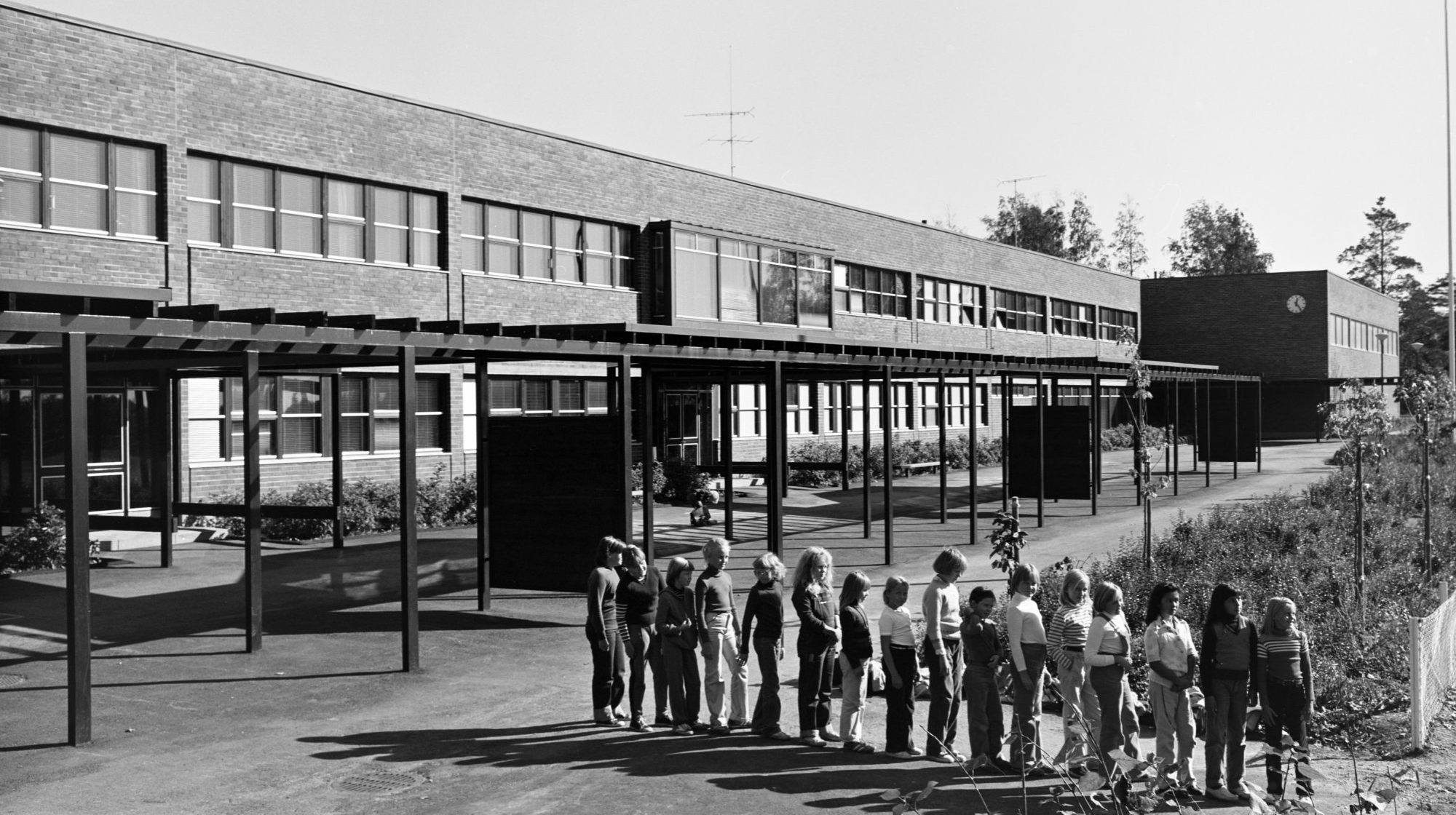
A new article by Kaisu Alamikkelä (University of Oulu) and Anna Kristiina Kokko (University of Eastern Finland), Becoming actors and sites of control: the relational interplay of school architecture, institutions and children as students, has been published open access in Critical Studies in Education. The article is freely available at: https://doi.org/10.1080/17508487.2026.2748163
In recent decades, schools around the world have been built and renovated with the promise of flexible, open and student-centred learning environments, where pupils would gain more freedom and responsibility for their own learning. The article asks why freedom does not expand as expected, even when the spaces are transformed.
The study draws on two ethnographic datasets produced in 2018–2021 in three newly built or extensively renovated Finnish primary schools. The material includes observation, walking interviews, documents, and children’s drawings and writings. The analysis focuses on children’s bodies: how they move, peer, slow down and fall silent, and how rhythms of control and resistance become perceptible through them.
The authors’ central argument is that the small, easily overlooked bodily movements reveal how power sustaining control works best when it remains hidden. The promises of wider freedom and choice are not fully delivered, and that children’s bodies are positioned in varying and not always equal ways within these spaces.

